Here is something nobody tells you about applicant tracking systems: they are not the enemy. They are basically search engines. And just like you would not blame Google for not finding your website when you built it entirely in Flash, you cannot blame an ATS for choking on a resume designed in Canva with six columns and a pie chart rating your own skills.
I have reviewed hundreds of resumes over the past few years - some from hiring managers forwarding them to me, some from friends panicking before a deadline. The pattern is almost always the same. The person is qualified. The resume just makes it hard to tell.
What an ATS actually does (the short version)
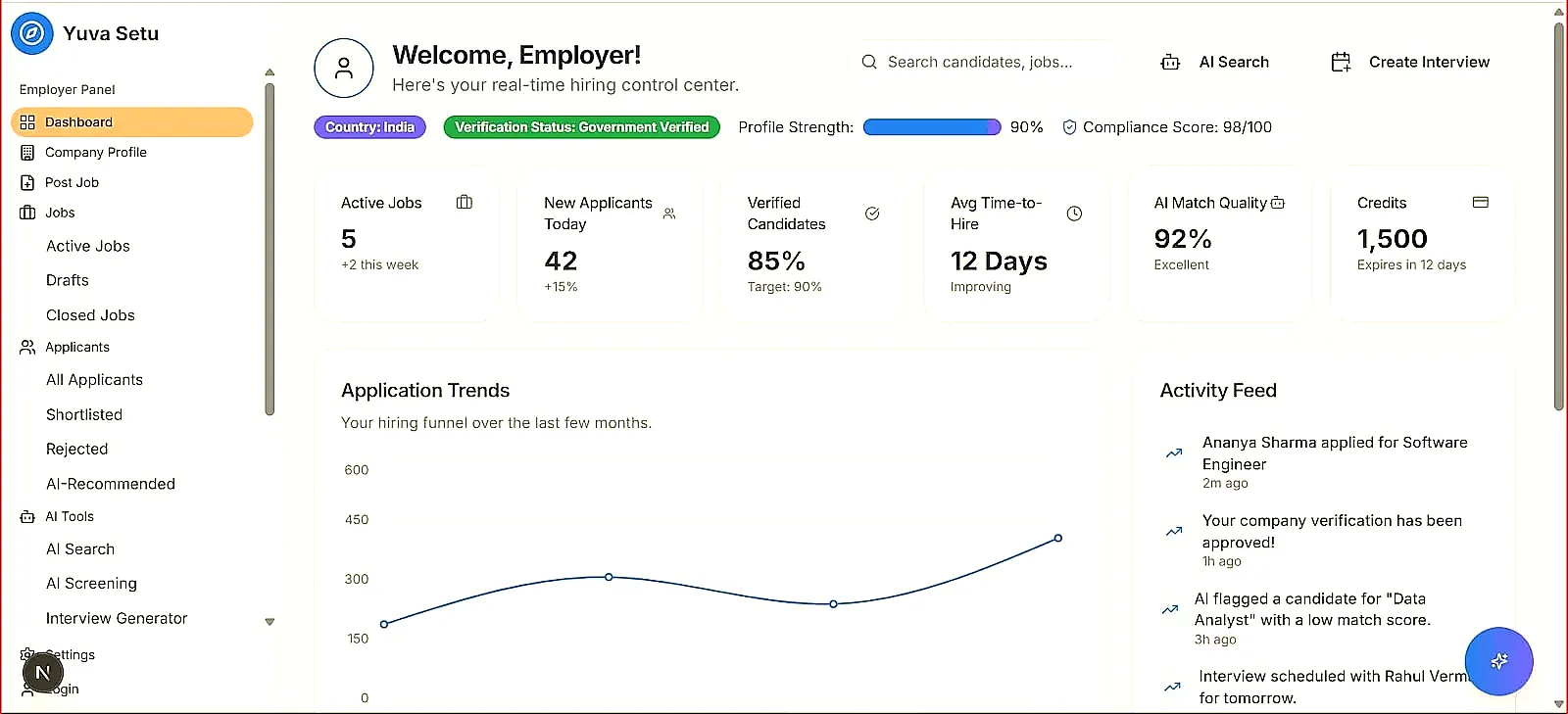
An applicant tracking system is software that companies use to manage incoming job applications. Think of it like a database. When you apply, the system ingests your file, attempts to extract structured information - your name, contact details, work history, skills, education - and stores that information in searchable fields. A recruiter can then search or filter by keywords, job titles, years of experience, or location.

That is literally it. There is no secret AI judging your font choice. The system is trying to read your document the way a computer reads any document: by looking for patterns it recognizes.
The major ATS platforms - Workday, Greenhouse, Lever, iCIMS, Taleo - each parse documents slightly differently. But the fundamentals overlap: they all expect text-based content, standard section headers, and a logical top-to-bottom reading order. When your resume respects those expectations, it parses cleanly. When it does not, pieces of your history can end up in the wrong field, or worse, disappear entirely.
Why "ATS-friendly" really means "readable"
The phrase "ATS-friendly" sounds like it means "designed for robots." In practice, it means the opposite. A resume that works well with tracking systems also reads better for humans. Clean headings, clear dates, logical structure, honest language - those are not robot-friendly traits. They are reader-friendly traits.
The resumes that fail are usually trying too hard. Two-column layouts that confuse reading order. Text embedded inside graphics. Skills rated on a five-dot scale that means nothing to anyone. Creative headers like "My Journey" instead of "Work Experience." These choices make the document harder for both software and people.
The formatting choices that actually matter
| Decision | Safe choice | Risky choice |
|---|---|---|
| Section headers | Experience, Education, Skills, Certifications | Where I've Been, What I Bring, My Toolbox |
| Layout | Single column, top to bottom | Multi-column with sidebars |
| Dates | Month Year - Month Year, right-aligned or after company | Dates hidden in paragraphs or omitted |
| File format | DOCX or well-structured PDF | Designed PDF with embedded fonts, JPEG, or portfolio link only |
| Fonts | Standard system fonts (Calibri, Arial, Georgia, Garamond) | Custom or decorative fonts that may not embed |
Keywords: match the job, do not stuff the page
Keywords matter because that is how recruiters search. If you are applying for a project manager role and your resume never says "project management," "stakeholder communication," or "timeline management," a recruiter filtering for those terms will not find you - even if you have done all of that work.
But keyword stuffing - cramming the same phrase in eight times or hiding white text behind a white background - does not work. Modern ATS platforms flag that. And recruiters who open the document will notice the awkwardness immediately.
The better approach: read the job posting carefully and note which terms appear repeatedly. Then check whether your resume already uses those terms naturally. If it does, you are fine. If it does not, ask yourself whether the gap is a language problem or a fit problem. If you have done the work but used different words, adjust the wording. If you genuinely lack the experience, no amount of keyword engineering will fix that - and you probably should not be applying for that specific role.
The summary section - keep it grounded
Recruiters spend somewhere between six and thirty seconds on a first pass. Your summary is the one section that gets read almost every time. Make it count by being specific.
Skip this
Results-driven professional with a proven track record of excellence in dynamic, fast-paced environments seeking to leverage extensive skills.
Write this instead
Marketing coordinator with four years of experience running email campaigns, managing social calendars, and reporting on channel performance for a B2B SaaS company. Comfortable with HubSpot, Google Analytics, and cross-team briefings.
The second version tells you the role, the industry, the tools, and the level in two sentences. The first tells you nothing a recruiter can act on. If you need more examples, we put together a full breakdown in our resume summary examples article.
Bullet points that prove something
This is where most resumes quietly fall apart. People list tasks instead of outcomes. "Managed social media accounts" tells a recruiter you were assigned that task. It says nothing about whether you did it well.
A stronger bullet answers three questions: what did you do, what was the scope, and what happened as a result?
- Weak: Managed client accounts and communicated with stakeholders.
- Stronger: Managed a portfolio of 35 mid-market accounts, running quarterly reviews and reducing churn by 12% year over year.
You do not need exact numbers for every bullet. But you need enough specificity that the reader can picture the work. "Large team" is vague. "A 14-person operations team across three offices" is something a recruiter can evaluate. Our bullet rewriter guide walks through a practical method for converting flat task bullets into evidence.
What about the skills section?
A skills section is useful for ATS parsing - it is one of the fields the system actively looks for. But treat it like a curated list, not a keyword dump. Only list skills you can actually demonstrate in an interview. Group them if that helps readability (Technical Skills, Languages, Certifications), and keep the list focused on what the target role needs.
One common mistake: listing every software you have ever opened. If you used Photoshop once to crop an image in 2019, it does not belong on a resume targeting data analyst roles. Relevance beats volume.
How major ATS platforms handle common formats
Based on publicly documented parsing behavior from major ATS vendors:
- Standard reverse-chronological resumes - parsed correctly by all major platforms
- Two-column layouts - partially supported, reading order often scrambled
- Tables for content - Workday and Taleo frequently misread cell order
- Headers and footers - ignored by most systems, contact info placed there gets lost
- Text-based PDFs - generally fine; image-based PDFs (scans) - usually fail completely
If you want a deeper look at how parsing works under the hood, our ATS parsing breakdown covers the technical side. And for the file format question specifically, there is a dedicated comparison in PDF vs Word for ATS.
The one-page vs two-page debate
I get this question constantly. Here is the honest answer: it depends on how much relevant experience you have.
If you have less than ten years of experience, one page is almost always enough. If you have fifteen-plus years, two pages is reasonable - but only if the second page earns its space with relevant content, not with padding from a job you had in 2006 that has nothing to do with your current direction.
No recruiter has ever complained about a resume being too easy to read. Plenty have complained about long resumes that bury the important information.
A practical editing checklist
Before you submit, run through these questions:
- Can a stranger figure out your target role within five seconds of looking at the top of the page?
- Are your dates consistent in format and clearly visible?
- Do your three most recent bullets show outcomes, not just tasks?
- If you pasted the document into a plain text file, would the content still read in the right order?
- Is every skill on the page something you could speak about in an interview without scrambling?
- Did you spell the company names and software correctly? (Seriously - "Salesforce" not "Sales Force.")
That checklist catches most of the problems I see repeatedly. It takes ten minutes and saves real opportunities.
What about design and visual appeal?
Clean design helps. Fussy design hurts. A well-spaced single-column resume with clear headings, consistent fonts, and enough white space is more visually appealing than a cramped two-column layout with colour bars and icons.
If you are in a creative field - graphic design, UX, branding - a portfolio or personal site can showcase design skills far better than a resume ever will. Keep the resume itself functional and let the portfolio do the creative heavy lifting. For everyone else, professional simplicity wins.
Our best resume format for ATS page walks through layout options that look polished without breaking parsing, and the templates library has formats you can start from directly.
Common myths worth ignoring
"You need to beat the ATS." There is nothing to beat. The system is not rejecting you - it is organizing applications. A recruiter still makes the decision.
"Colour will get your resume rejected." Colour is fine for headings or subtle accents. What matters is that the text itself is machine-readable, not embedded in an image.
"You should never include a summary." Some recruiters prefer jumping straight to experience. But a two-line summary that clarifies your direction is rarely a negative - especially when you are switching fields or re-entering the workforce.
"One typo and you are out." Depends on the role. For a writing position, yes. For a warehouse operations role, most hiring managers care more about your forklift certification. Context matters.
What changes in 2026
The fundamentals have not changed much. What has changed is volume. Companies receive more applications than ever, which means more reliance on ATS filtering and faster initial screening. That makes clarity more important, not less.
AI-assisted hiring tools are also becoming more common. Some systems now attempt to score candidates against job descriptions algorithmically. That means natural keyword alignment matters slightly more than it did five years ago - but the advice is still the same: describe your real work in language the employer would use, and the alignment happens naturally.
Real talk: when formatting is not the problem
Sometimes a resume is not getting responses because the candidate is applying for roles that genuinely do not fit their background. No formatting change fixes a mismatch. If you have been sending fifty applications with zero callbacks, the issue might not be your ATS formatting - it might be your targeting.
Step back and ask: am I applying for roles where my experience clearly overlaps with at least 60-70% of the requirements? If not, consider adjusting the roles you target before adjusting the resume again. Our guide on tailoring your resume to specific job descriptions covers this angle in detail.
For more on the resume writing process, browse the Resume Writing section. And if you want to work on your document inside a live editor, open the resume builder and test your wording directly.
Trusted external resources
- Indeed's ATS resume guide - practical overview from a job board that processes millions of applications
- Jobscan's ATS breakdown - detailed look at how different ATS platforms handle resume formats
Useful next steps
If you found this useful, the guides below go deeper into specific parts of the ATS puzzle. The format guide covers layout and typography choices, while the parsing breakdown explains exactly what happens under the hood when you upload your file. Start wherever your biggest question is.
- Best Resume Format for ATS
- PDF vs Word for ATS: Which File Type Is Safer?
- How Applicant Tracking Systems Actually Parse Your Resume
- Resume Summary Generator
Frequently Asked Questions
Will an ATS reject my resume because of formatting?
Not exactly. The system does not "reject" - it parses. If the parsing fails, your information ends up incomplete or garbled in the recruiter's view. The recruiter may then skip you, but that is a human decision based on incomplete data, not an automated rejection.
Should I remove all design from my resume?
No. Clean design is fine. The problem is design that interferes with text extraction - like putting your job titles inside graphics, using text boxes instead of standard paragraphs, or relying on columns that break reading order.
Do I need different resume versions for different jobs?
You do not need completely different resumes, but you should tailor the summary, skills emphasis, and top bullets to match each role. A single generic version sent to 200 companies will underperform a lightly customized version sent to 30.